How We Work

Structured patient-access support for clinics that need reliability

We follow a clear operational framework designed to reduce communication breakdowns, improve scheduling consistency, and
bring more stability to day-to-day front-desk workflows.

Closing the Gaps That Create Front-Desk Friction

Most front-desk breakdowns are not caused by lack of effort. They are caused by communication gaps, inconsistent
workflows, unclear routing, and overloaded teams trying to manage too much at once.

Those gaps lead to missed calls, scheduling issues, message delays, and unnecessary administrative friction.

Our approach is designed to identify where those breakdowns happen, bring structure to the workflow, and improve
day-to-day reliability.
Our 5-Step Operational Framework

1. Discover

We learn how your clinic currently handles calls, scheduling, message routing, and front-desk workflows, so we can see where breakdowns and pressure points are happening.

Outcome:

A clear picture of workflow gaps, communication risks, and administrative friction points

magnifying glass
connecting nodes

2. Integrate

We align with your existing systems, scheduling rules, and documented processes so support can be added without creating unnecessary disruption.

Outcome:

A smoother transition with clear workflow alignment

3. Stabilize

We bring more consistency to day-to-day call handling, scheduling support, documentation, and message flow so fewer things fall through the cracks.

Outcome:

More reliable and repeatable front-desk support processes

shield
Gear

4. Optimize

Once the workflow is stable, we identify bottlenecks, reduce avoidable friction, and improve how work moves through the process.

Outcome:

Better efficiency, fewer delays, and less administrative strain

5. Scale

As needs evolve, we refine workflows and expand support in a controlled way that protects reliability.

Outcome:

More sustainable growth with structured operational support

growth

Built on Proven Process Methodologies

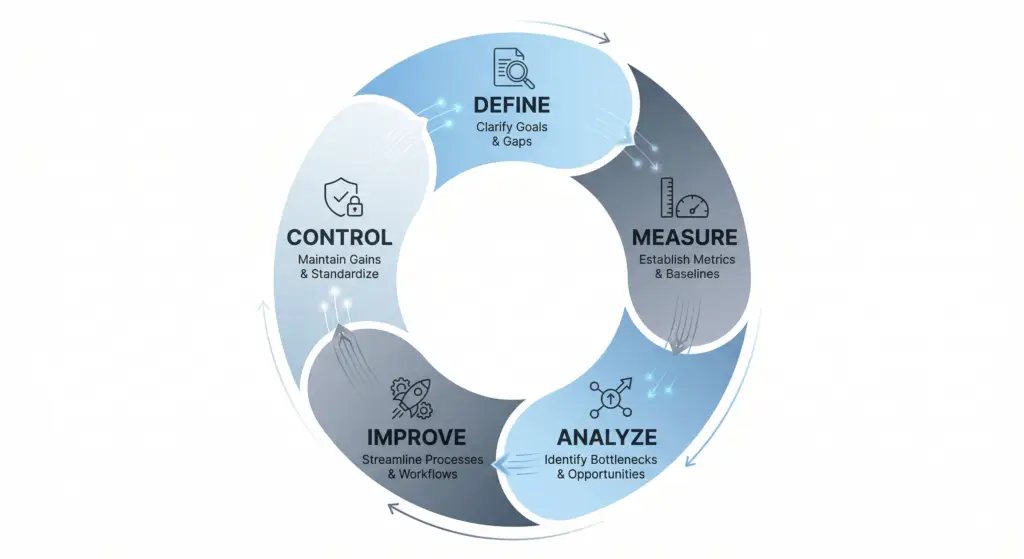
Our approach is supported by established process improvement methods, including DMAIC (Define, Measure, Analyze, Improve, Control) and workflow-based management practices that help bring more structure and consistency to day-to-day operations.

These methodologies help us:

  • create clearer visibility into workflow performance
  • identify issues earlier
  • improve how communication, scheduling, and administrative work move through the process

The goal is not process for its own sake. It is more reliable execution, less avoidable friction, and stronger
operational consistency over time.

Operational Framework using DMAIC Diagram

Build a More Reliable Front-Desk Operation

See how Continuum supports clinics with structured patient-access and workflow-driven operational support.

More Than Outsourcing

Most outsourcing providers focus on task coverage alone. Continuum is built to provide structured support that improves reliability over time.

We do not just take work off your plate. We help bring more consistency to call handling, scheduling support, message routing, and administrative workflows so your team has clearer structure and less day-to-day friction.

We are not here to replace your team. We are here to support it with disciplined workflows, clearer processes, and more reliable operational support.

Let’s Talk About What Your Practice Needs